

No products in the cart.
Cash on Delivery All Over Pakistan - Upto 40% OFF - Limited Time Sale
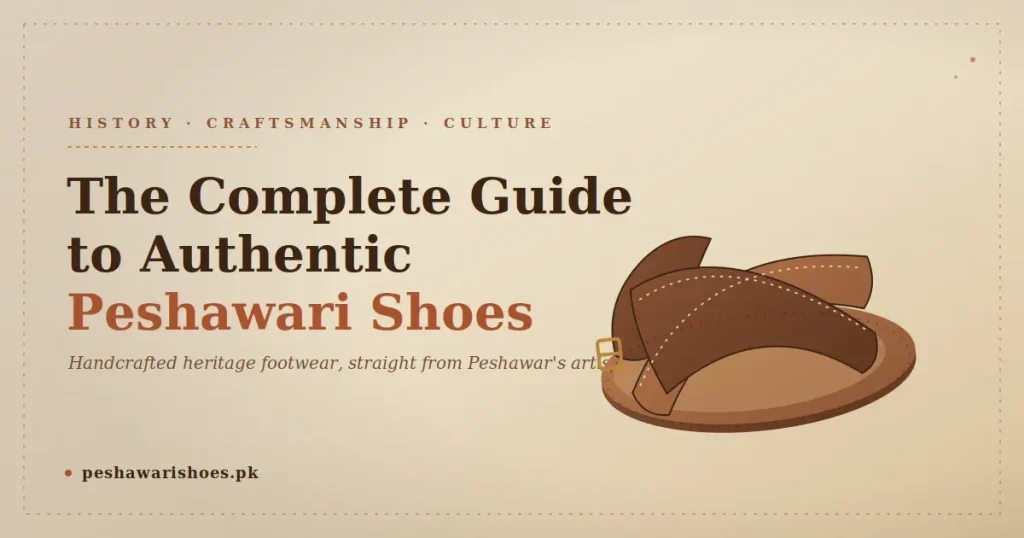
If you’ve ever watched a Pakistani wedding, an Eid gathering, or even a casual street scene in Peshawar, chances are you’ve spotted a pair of Peshawari shoes. Simple in shape but rich in meaning, these handcrafted leather sandals have quietly become one of the most recognizable pieces of South Asian menswear – worn with everything from a traditional shalwar kameez to a modern pair of jeans.
But there’s more to Peshawari shoes than their distinctive two-strap silhouette. Behind every pair is a centuries-old craft, a specific regional identity, and a story of how a rugged mountain sandal became a global fashion statement. This guide walks through where Peshawari shoes come from, how they’re made, and why they’ve earned a permanent place in Pakistani culture – and in wardrobes far beyond it.
What Are Peshawari Shoes?
Peshawari shoes are a style of traditional, semi-closed leather footwear native to Pakistan, named after the city of Peshawar in Khyber Pakhtunkhwa. The design is instantly recognizable: two wide leather straps cross over the foot and meet the sole, often finished with a heel strap and buckle for a secure, adjustable fit.
They go by several regional names depending on where they’re made – Kohati chappal, Kaptaan (Captaan) shoes, Zari chappal, and Chakwali chappal are all close cousins of the same family of footwear, each with subtle differences in strap style, sole thickness, or finishing. If you browse our Peshawari shoes collection, you’ll notice these regional variations reflected in the range of colours, leather finishes, and strap patterns available today.
The History and Origins of Peshawari Shoes
The roots of this footwear stretch back generations, tied closely to the artisan traditions of the hill and tribal regions of what is now Khyber Pakhtunkhwa and parts of northern Punjab. Early versions were built for practicality first: durable leather uppers and thick soles – traditionally cut from old truck tyres – designed to survive rocky, mountainous terrain far better than soft leather sandals ever could.
Over time, as the design moved along trade routes into Peshawar’s urban centres, local craftsmen began refining it with softer leathers, sharper stitching, and more polished finishing. This is largely how the shoe came to be known internationally as the “Peshawari chappal” – named after the city that became one of its most important production and trading hubs, even though nearby regions like Kohat, Charsadda, and Chakwal each developed their own signature styles.
The shoe’s cultural weight grew alongside its craftsmanship. It became closely associated with Pashtun identity and everyday menswear across Khyber Pakhtunkhwa, before spreading nationally as a staple for weddings, Eid, and formal gatherings across Pakistan. Its popularity in mainstream fashion got a further boost in the 1990s, when public figures began pairing it casually with jeans rather than only traditional dress – a styling shift that helped introduce Peshawari shoes to a much younger, style-conscious audience.
The design’s global recognition reached a notable milestone in 2014, when a major international designer released a strikingly similar sandal at a steep price point, sparking a widely covered conversation about cultural origin and craftsmanship recognition. (You can read the fuller documented history on Wikipedia’s Peshawari chappal entry.) For local artisans, it was a reminder of how distinctive – and exportable – this craft really is
Peshawari Shoes vs. Kohati Chappal vs. Kaptaan Shoes
Because so many regional names get used interchangeably, it’s worth breaking down the most common variations you’ll come across when shopping:
- Peshawari Shoes – The classic silhouette: crossed leather straps, a low profile, and a clean, versatile finish that works with both traditional and modern outfits. Browse the full Peshawari shoes range for options like olive green, dark brown, and black.
- Kohati Chappal – Typically features a thicker sole and a broader front strap, giving it a slightly sturdier, more rugged look. See our Kohati chappal collection.
- Kaptaan Shoes – Named for their association with a more tailored, “captain-style” silhouette, often chosen for semi-formal and wedding wear. Explore the Kaptaan shoes collection.
Each style shares the same DNA – handmade leather construction and open-strap design – but the small differences matter when you’re choosing footwear for a specific occasion or outfit.
The Craftsmanship Behind Every Pair
What separates an authentic pair of Peshawari shoes from a mass-produced imitation is almost entirely down to the hands that make it.
Materials. Genuine Peshawari shoes are built on real leather uppers – full-grain or top-grain, depending on the style – chosen for its durability and the way it softens and molds to the foot over time. Soles are typically leather, rubber, or a reinforced composite designed for long wear, a tradition that traces directly back to the tyre-soled originals.
Handwork. Skilled artisans cut, stitch, and shape each pair largely by hand, a process that can take years of training to master. Strap tension, stitching density, and edge finishing are all judged by eye and feel rather than machine calibration, which is why two “identical” pairs from a small workshop can still have small, honest variations – a hallmark of handmade goods, not a flaw.
Finishing. The final stage – buffing, edge staining, and buckle fitting – is what gives each pair its polish. It’s also usually where the biggest quality gap shows up between authentic handcrafted shoes and cheaper synthetic copies, which tend to use glued uppers and machine-stamped patterns instead of genuine stitched leatherwork.
If you want to go deeper on spotting the difference before you buy, our companion guide on identifying genuine leather versus synthetic Peshawari shoes covers the exact things to check – grain texture, stitching, smell, and flex.
Why Peshawari Shoes Remain Popular Today
A few reasons this centuries-old design hasn’t faded with trends:
- Comfort-first construction – the open, breathable strap design suits warm climates far better than closed formal shoes.
- Versatility – equally at home with a shalwar kameez at a wedding or with jeans and a kurta for everyday wear.
- Cultural identity – for many, wearing Peshawari shoes is a deliberate nod to heritage and craftsmanship, not just a footwear choice.
- Durability – genuine leather construction means a well-cared-for pair can outlast several seasons of trend-driven footwear.
Peshawari Shoes in Modern Pakistani Culture
Today, Peshawari shoes sit at an interesting crossroads between tradition and everyday fashion. They remain a near-default choice for weddings and Eid – particularly for the groom and close family – while also showing up regularly in casual, Western-influenced outfits among younger buyers. Local designers and small workshops continue to experiment with colours, suede finishes, and detailing, while staying true to the original hand-stitched construction that makes the shoe what it is.
This dual identity – deeply traditional, yet effortlessly modern – is a big part of why demand for authentic, well-made Peshawari shoes continues to grow, both within Pakistan and among diaspora buyers looking to stay connected to the craft.
How to Choose Authentic Peshawari Shoes
When shopping, keep an eye out for:
- Genuine leather uppers – check for natural grain variation, not a uniform plastic-like texture.
- Visible hand-stitching – small irregularities in stitch spacing are a good sign, not a defect.
- A proper sole – leather or reinforced rubber, with clean edge finishing.
- Regional style clarity – know whether you want the classic Peshawari cut, a Kohati chappal, or Kaptaan shoes, since fit and formality differ slightly between them.
You can explore our full handmade range – including desert tan, navy blue, and suede camel brown options – in our Peshawari shoes collection
Frequently Asked Questions
What makes Peshawari shoes different from regular sandals? Peshawari shoes use a distinct crossed-strap leather construction and a heel buckle for fit, combined with traditional handmade stitching – unlike mass-produced sandals, which are usually machine-assembled from synthetic materials.
Are Kohati chappal and Peshawari shoes the same thing? They’re closely related but not identical. Kohati chappal generally has a thicker sole and broader front strap, while classic Peshawari shoes have a lower-profile, more streamlined look.
Can Peshawari shoes be worn with Western outfits? Yes. Pairing Peshawari shoes with jeans or chinos has become a common, accepted styling choice, especially for casual and semi-formal occasions.
How do I know if a pair is genuine leather? Genuine leather has natural grain variation, develops a slight sheen with wear, and has a distinct leather smell – synthetic versions tend to look and feel uniform and plasticky.
Final Thoughts
Peshawari shoes aren’t just footwear – they’re a living piece of craftsmanship history, refined over generations by artisans who still make each pair largely by hand. Whether you’re buying your first pair for a wedding or restocking a wardrobe staple, choosing an authentic, well-made pair means you’re getting comfort, durability, and a genuine piece of the tradition.
Ready to find your pair? Browse our full Peshawari shoes collection, or get in touch with our team if you need help choosing the right style or size.
Shopping Cart0
Shopping Cart0
No products in the cart.